Before Nike. Before the waffle iron and the swoosh, before a salesman named Chuck put his signature on an ankle patch, the biggest name in American sneakers was four letters long.
It was made in a brick factory on the Charles River. And then it disappeared so completely that the industry it helped build forgot it had ever been there.
Chapter I · 1896–1929
Four letters on the Charles
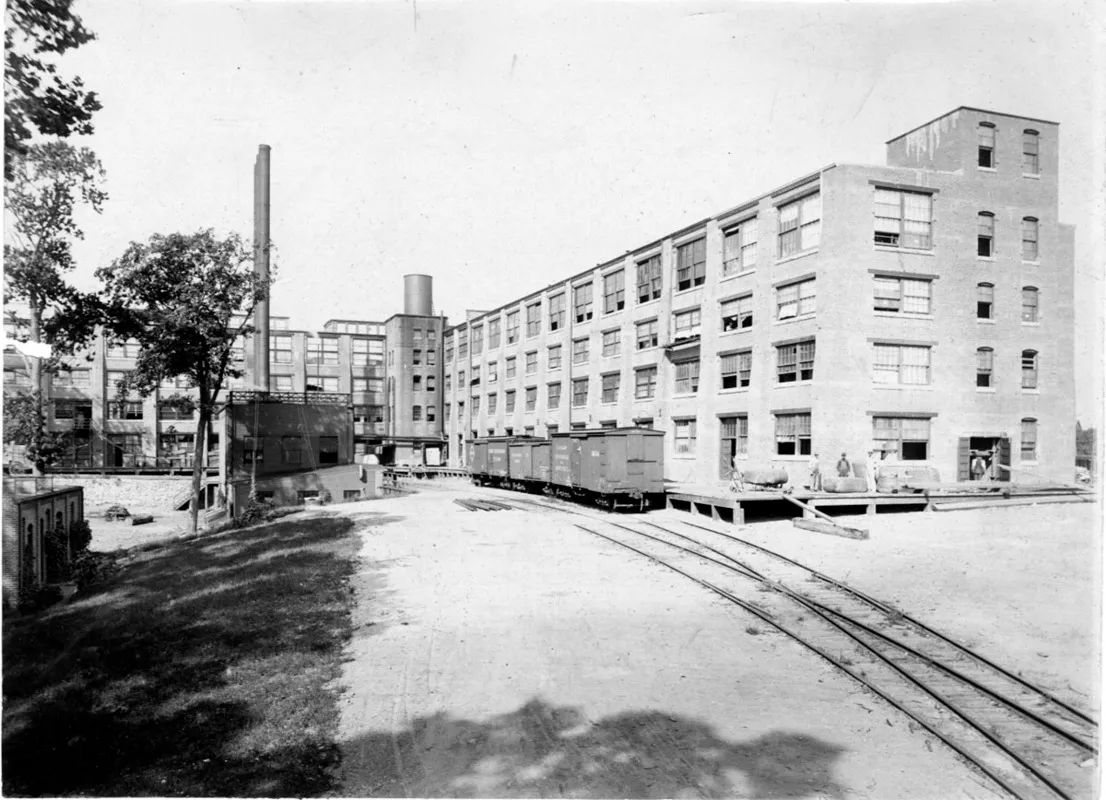
On 12 October 1896 two brothers, Frederic and Arthur Hood, incorporated a rubber company in Watertown, Massachusetts. Their plant opened with 225 people. On its first day it made ten pairs of rubber boots.
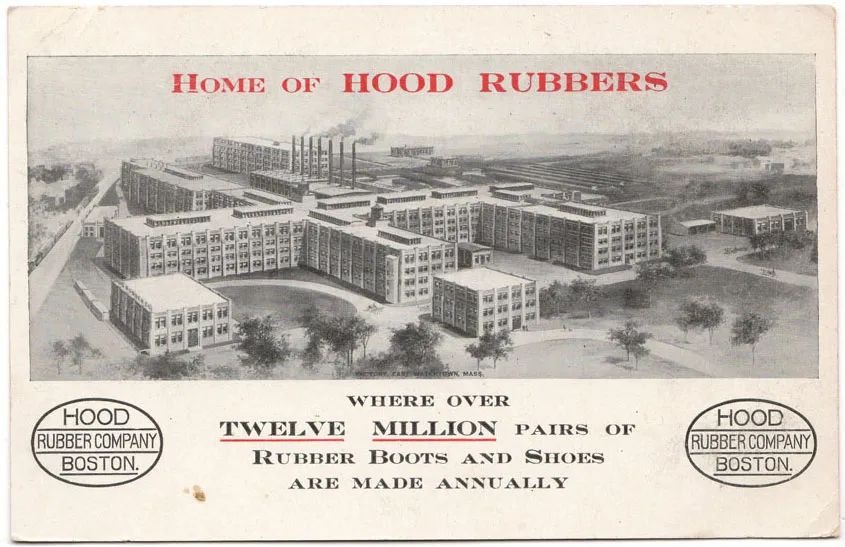
Twenty-four years later it employed more than ten thousand. In 1920 its sales came to nearly thirty-three million dollars — well over half a billion in today’s money — and for three months that year the floor turned out more than eighty thousand pairs of shoes a day. A company postcard of the period does not bother with adjectives. It simply gives the number: twelve million pairs a year.
The Watertown plant, with its own rail siding“Twelve million pairs … made annually”
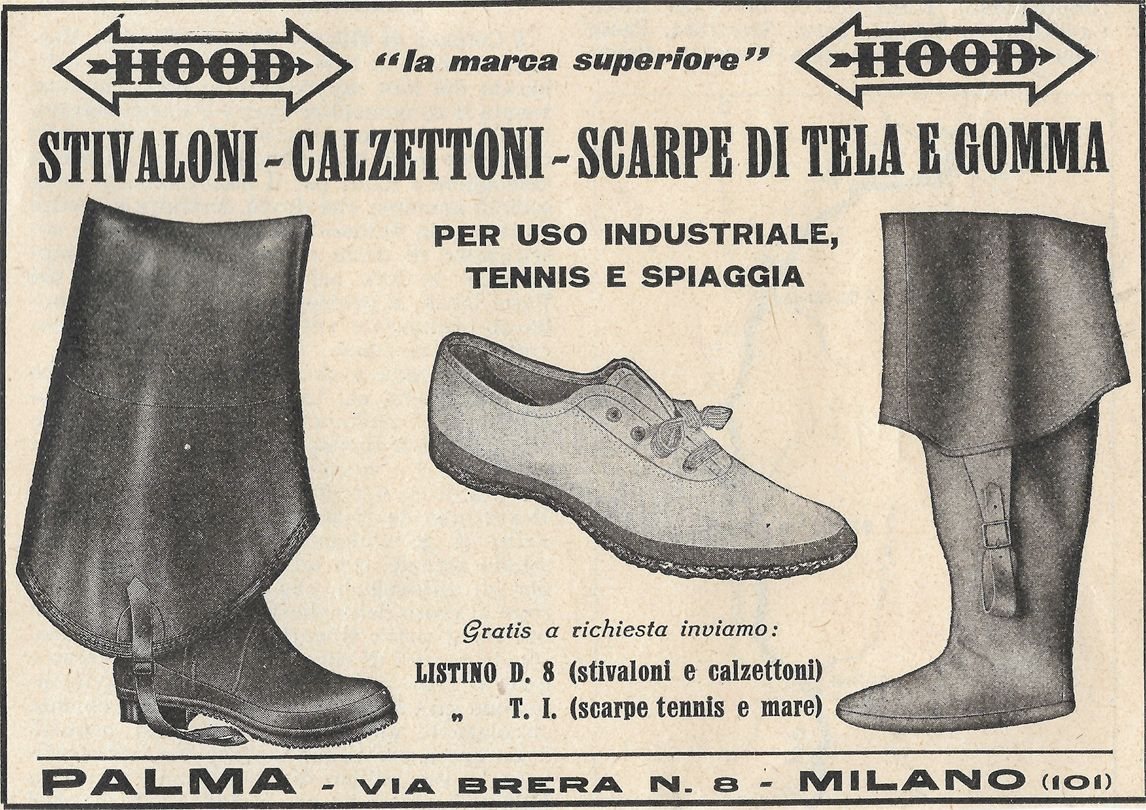
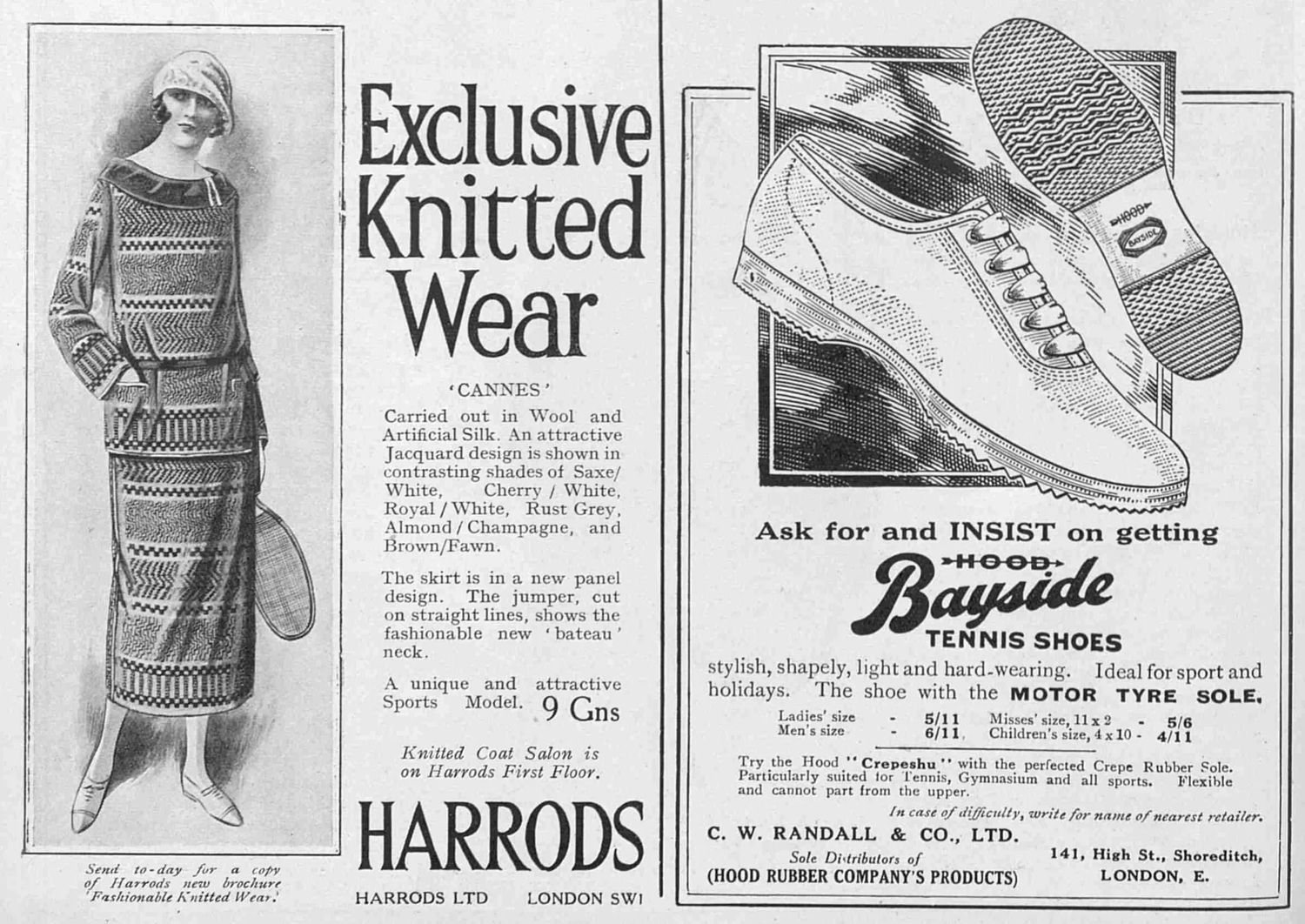
By 1929 Watertown was the largest footwear plant in the world, averaging seventy-five thousand pairs a day, and its shoes were exported to eighty-four countries. In Milan they were la marca superiore, sold from the Via Brera. In the London papers the Hood Bayside tennis shoe ran beside the Harrods advertisements: “the shoe with the motor tyre sole.”
Nobody had to explain the name. That was the point.
Milan · “la marca superiore”London · the Hood Bayside, beside Harrods
Interlude · 1906–1960
An arrow, driven through the name.
Every serious sports brand now sells motion with a mark — a shape that looks fast before you have read a word. Hood registered one in 1907.
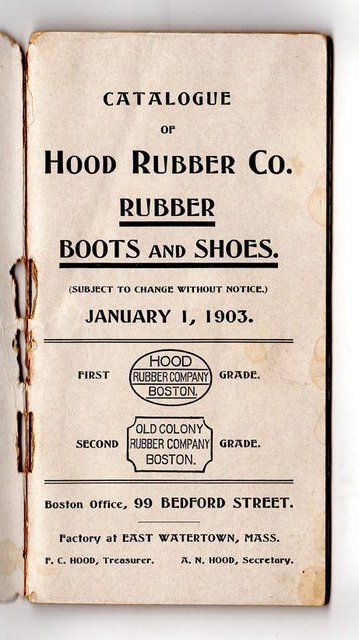
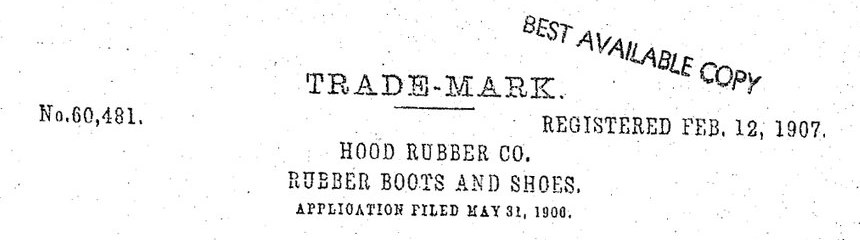
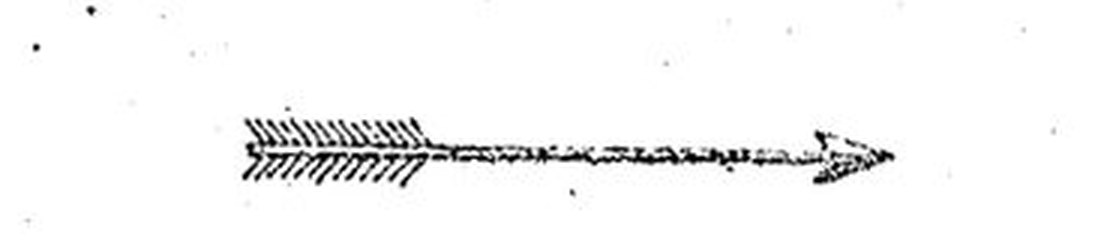
The 1903 catalogue still carried an oval stamp, the company name set inside it like a return address. Then, on 31 May 1906, Hood filed to register a new mark for its rubber boots and shoes: a single feathered arrow, in flight. Trade-Mark No. 60,481 was granted on 12 February 1907.
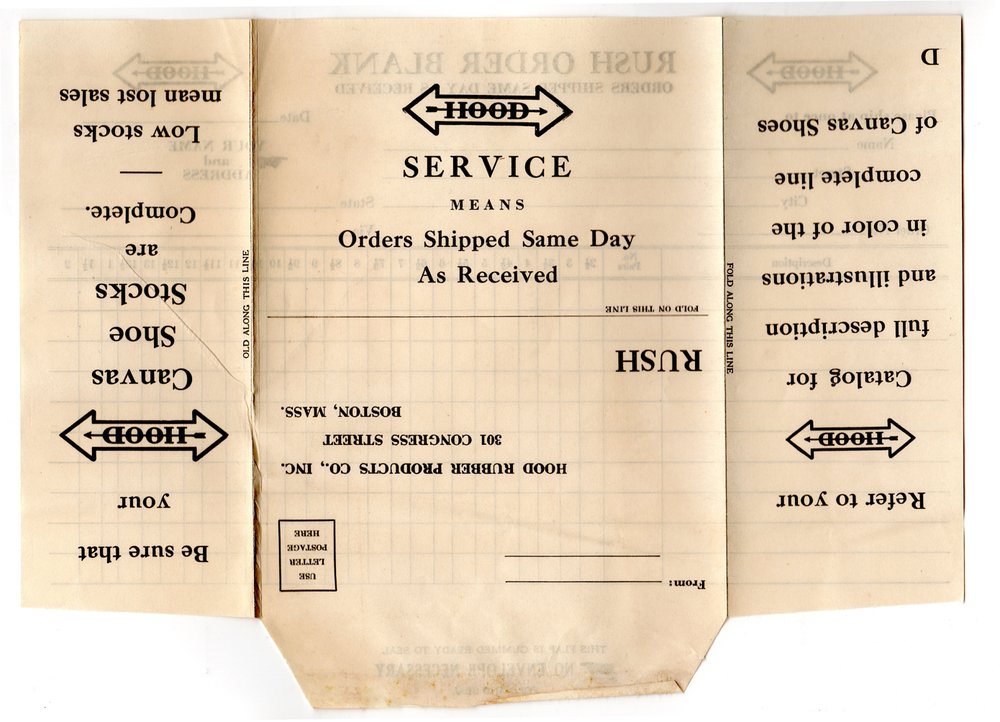
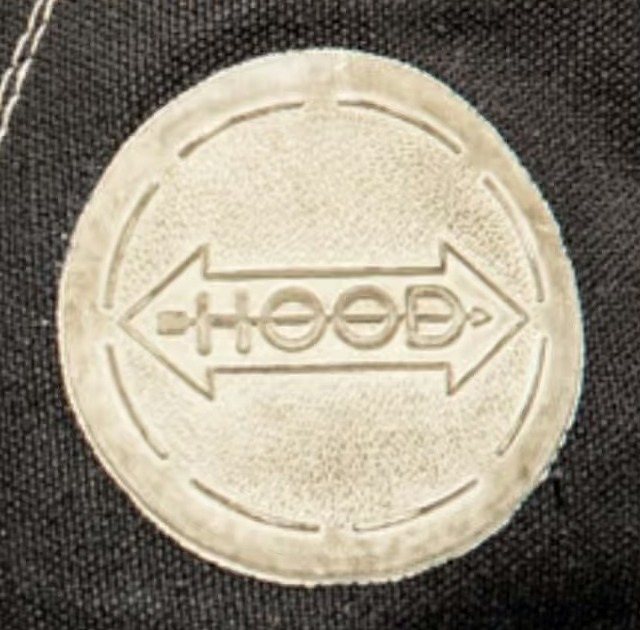
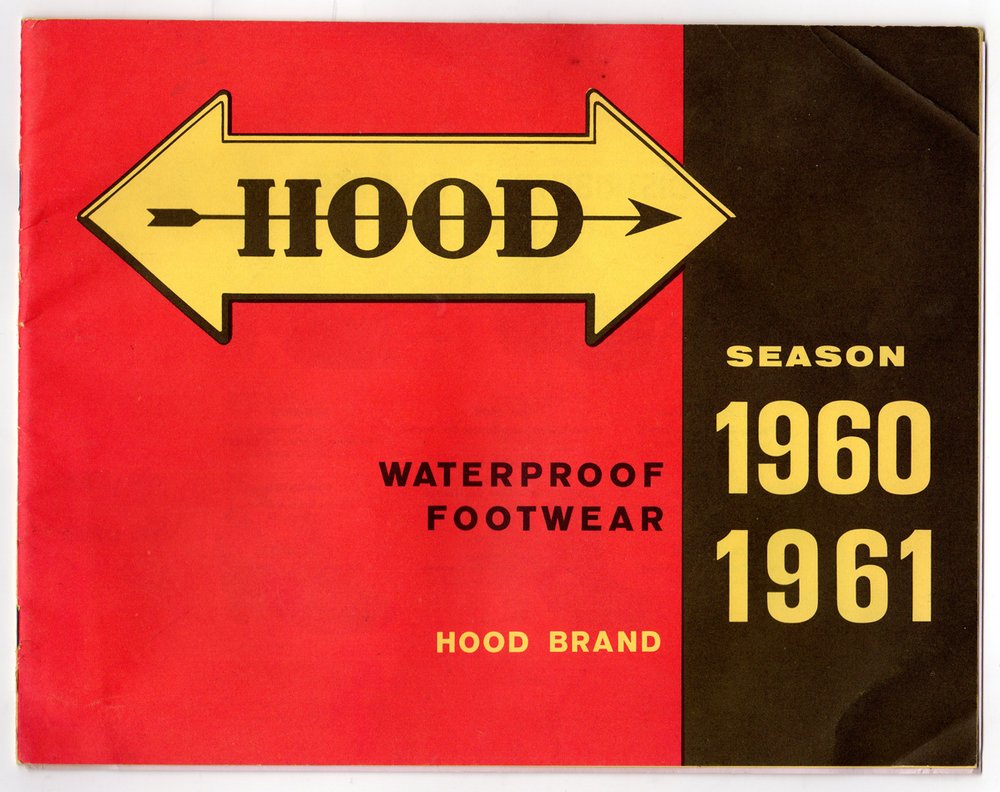
Over the next half-century the company worked the idea down to its essentials. The arrow was driven through the name, so that the name itself seemed to move. Then it grew a second head and pointed both ways at once — forward and back, left and right, the way a player moves on a court. It went on the catalogues, the order forms and the boxes, and, pressed into white rubber, on the ankle of the Conference. By 1960 it filled a catalogue cover on its own: no slogan, just the arrow and four letters.
A brand built on the idea of motion, more than sixty years before the most famous mark in sneakers was ever drawn.
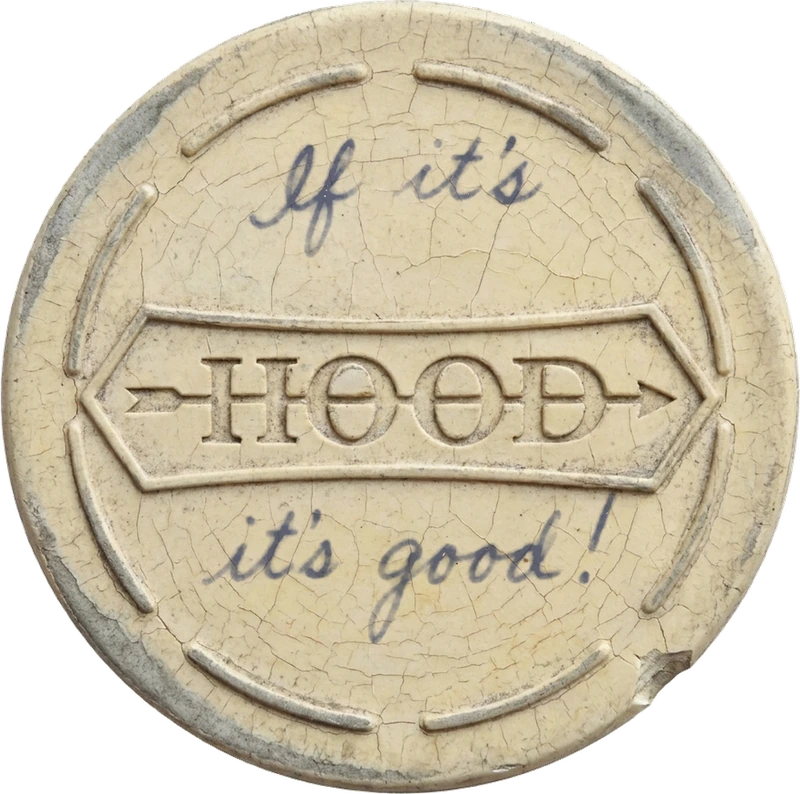
The lateral patch · “If it’s Hood, it’s good”
1903Before the arrow: an oval stamp
1907Trade-Mark No. 60,481: the arrow in flight
1920sThrough the name
1930sA second head: both ways at once
1934Over the Conference
1955Pressed into rubber, at the ankle
1960Nothing else needed
Chapter II · 1914–1935
A shoe for the new game
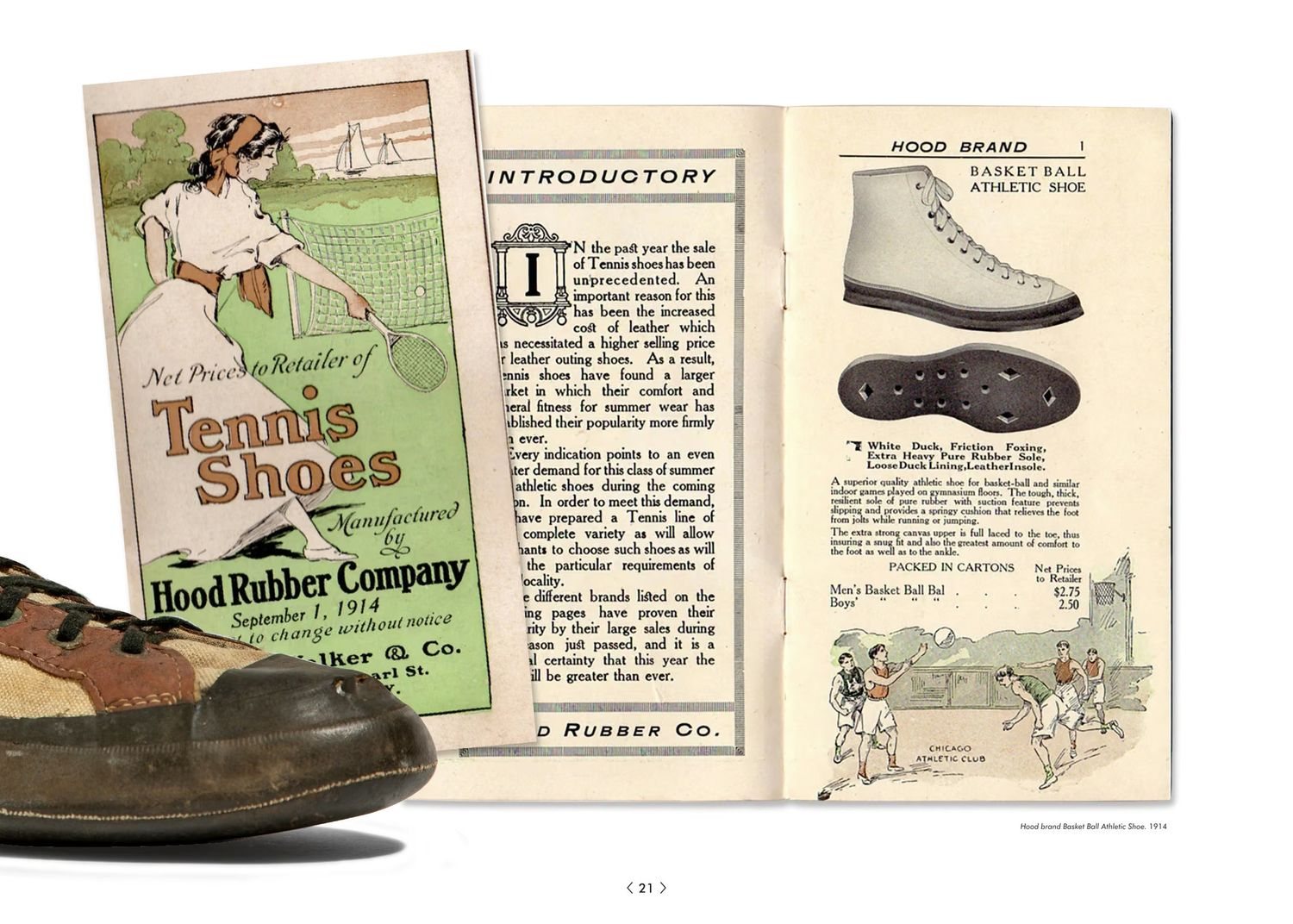
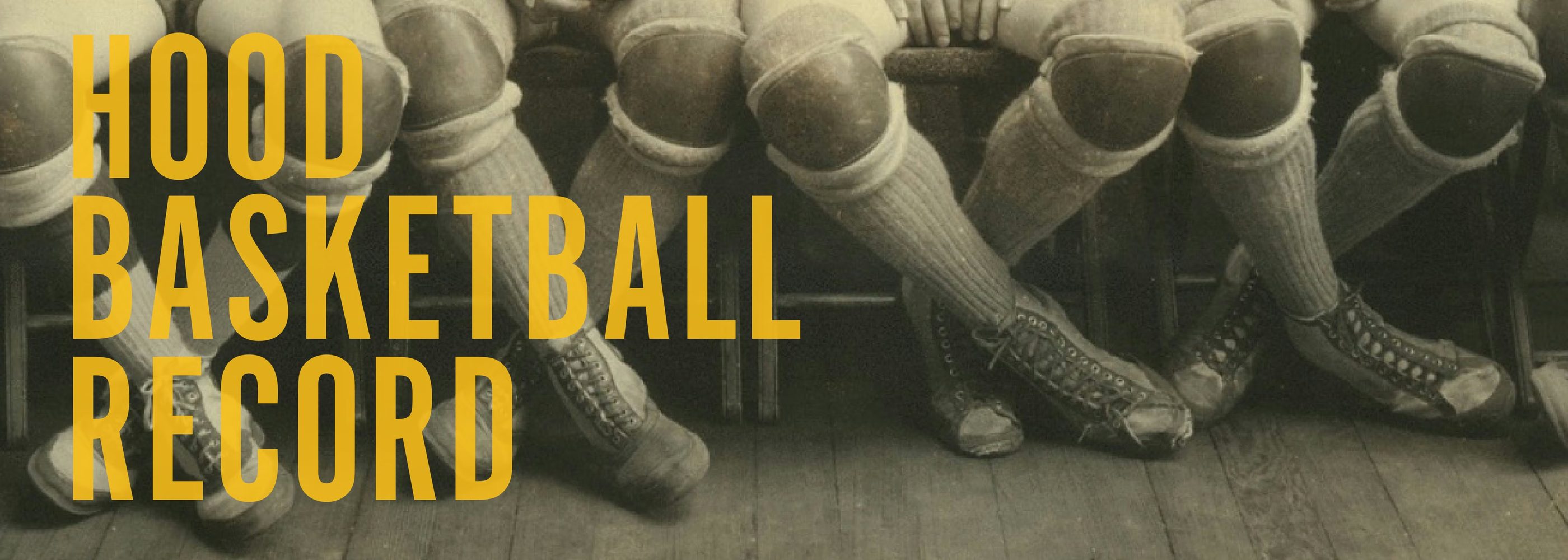
Basketball was barely twenty years old when Hood built a shoe for it. The company’s September 1914 tennis-shoe catalogue lists a canvas high-top as a basketball shoe — not a gym shoe, not a tennis shoe — three years before Converse introduced the All Star.
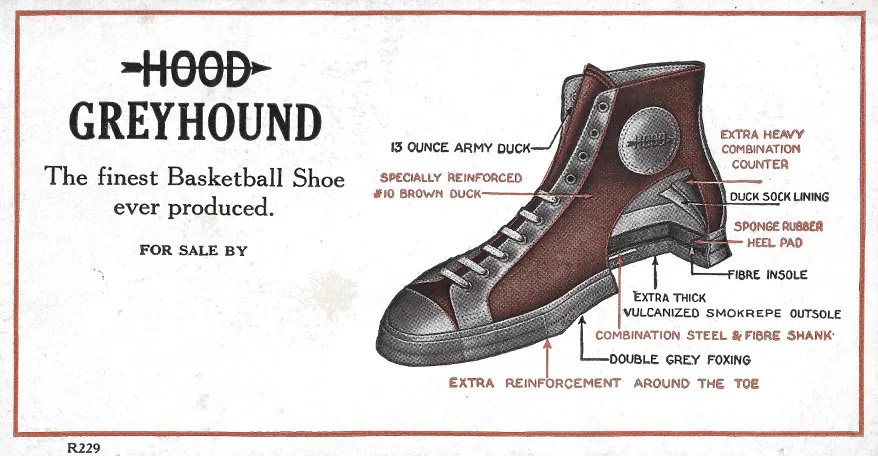
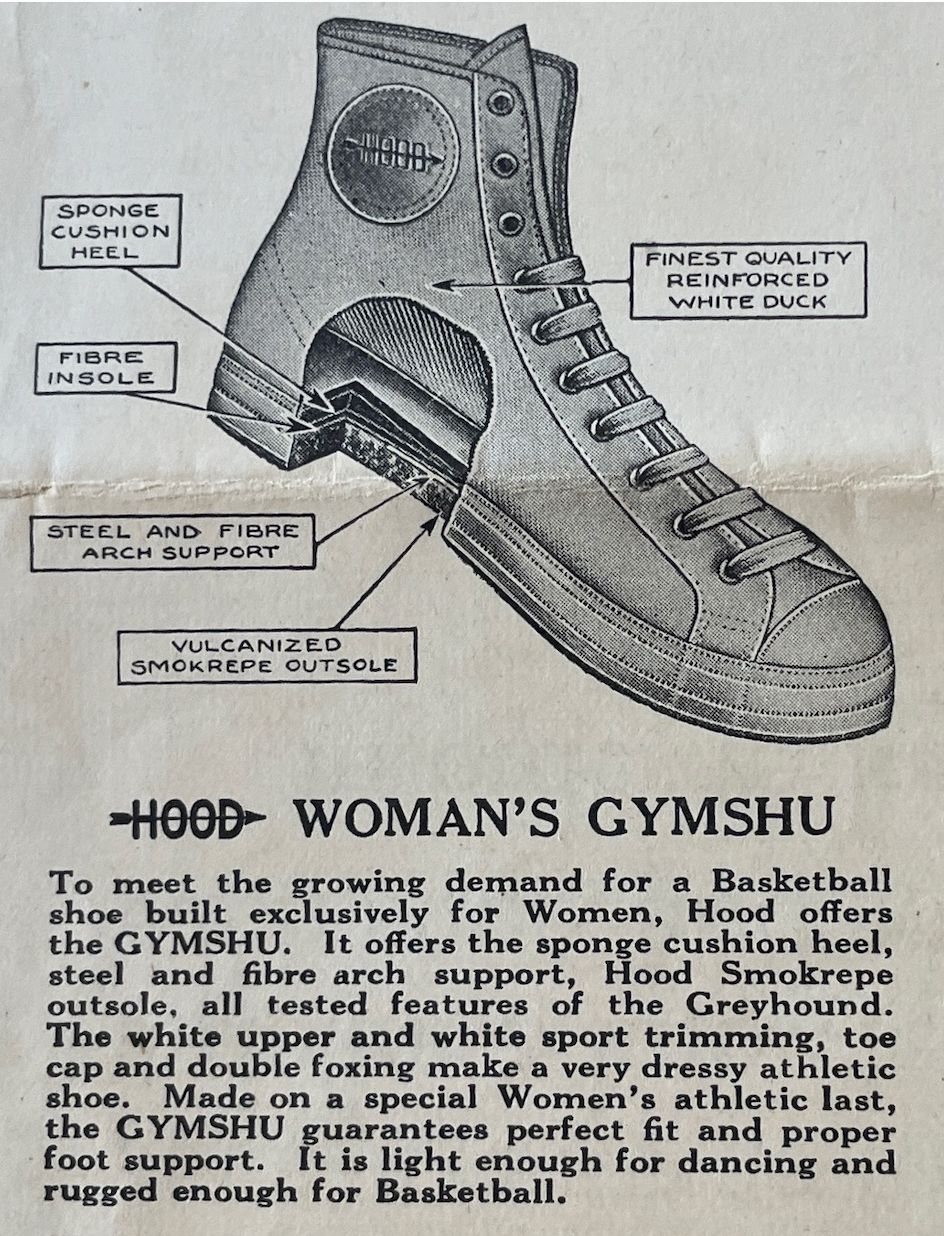
Through the twenties and thirties Hood advertised its basketball shoes as “the finest basketball shoe ever produced,” and it could point to the details: a ribbed, reinforced rubber toe bumper and a sponge-cushion heel, both Hood’s own. In 1924 it made the Gymshu, a basketball shoe “built exclusively for women,” with the same cushioned heel and arch support as the men’s — decades before most of the industry treated women’s sport as anything more than an afterthought.
1914 · the basketball shoe and its catalogue1924 · the Woman’s Gymshu
Chapter III · 1900–1959
What everyone else inherited
Some of Hood’s ideas were so good that the whole business took them, and within a generation nobody remembered where they had come from.
c. 1904
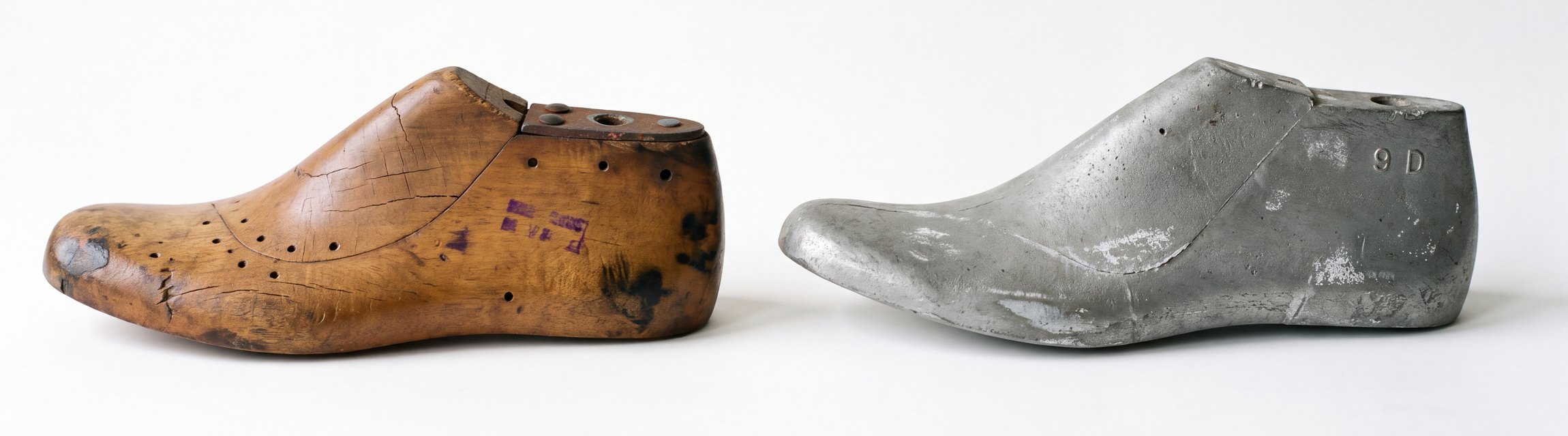
The aluminum last
Wooden lasts wore down and warped in the heat of the vulcanizer. Frederic Hood had them cast in aluminum instead, in a small foundry in the boiler room. The company’s own history records that they were soon used throughout the rubber footwear trade in America.
Maple, and cast aluminum
c. 1915
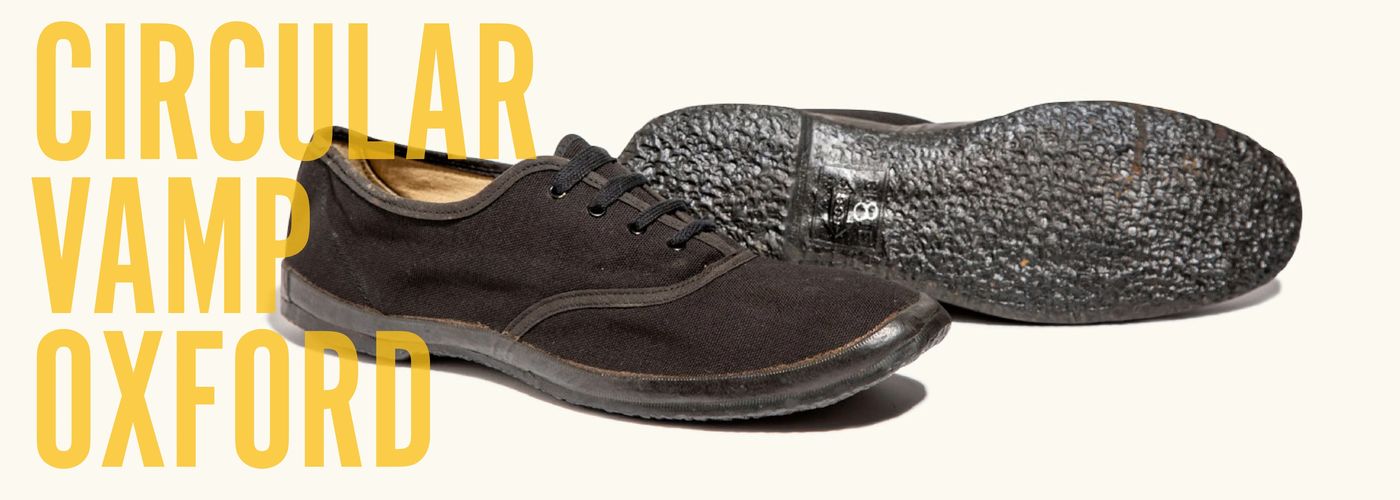
The circular vamp oxford
One piece of canvas wrapped around the foot and closed at the toe by a rubber foxing. Hood’s Clyde carried the pattern around 1915. Half a century later the same pattern left Anaheim as the Van Doren Rubber Company’s No. 44 deck shoe, and it has been on the feet of every generation since.
The circular vamp oxford · from Canvas + Rubber
1936
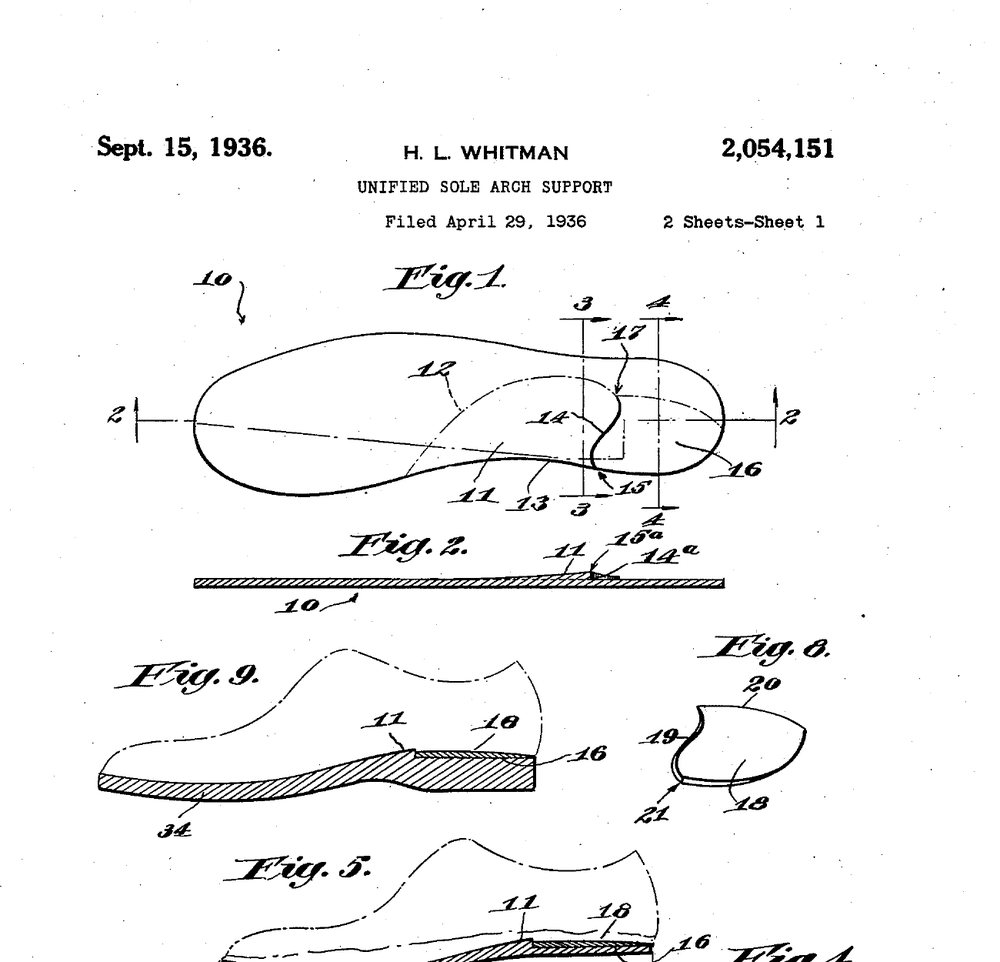
The Posture Foundation
Hyman L. Whitman was a shoe consultant from East Bridgewater who had advised the Navy on footwear during the First World War. Working from anatomy and hundreds of medical reports, he set a rigid wedge of hard rubber into the insole to carry the body’s weight to the outer edge of the foot, then tested it on the feet of hundreds of Watertown schoolchildren.
He filed on 29 April 1936. The patent issued that September as US 2,054,151, Unified Sole Arch Support, “particularly adapted to use in tennis shoes” — and its first line names the owner: Hyman L. Whitman, Bridgewater, Mass., assignor to Hood Rubber Company, Inc., Watertown, Mass. Hood stamped two letters on the insole: P-F.
“Mr. Whitman was the inventor of the ‘Posture Foundation.’”The Boston Globe, 2 January 1952
US 2,054,151 — Whitman’s unified sole arch support, 15 September 1936
1933 · 1937
Look under any basketball shoe.
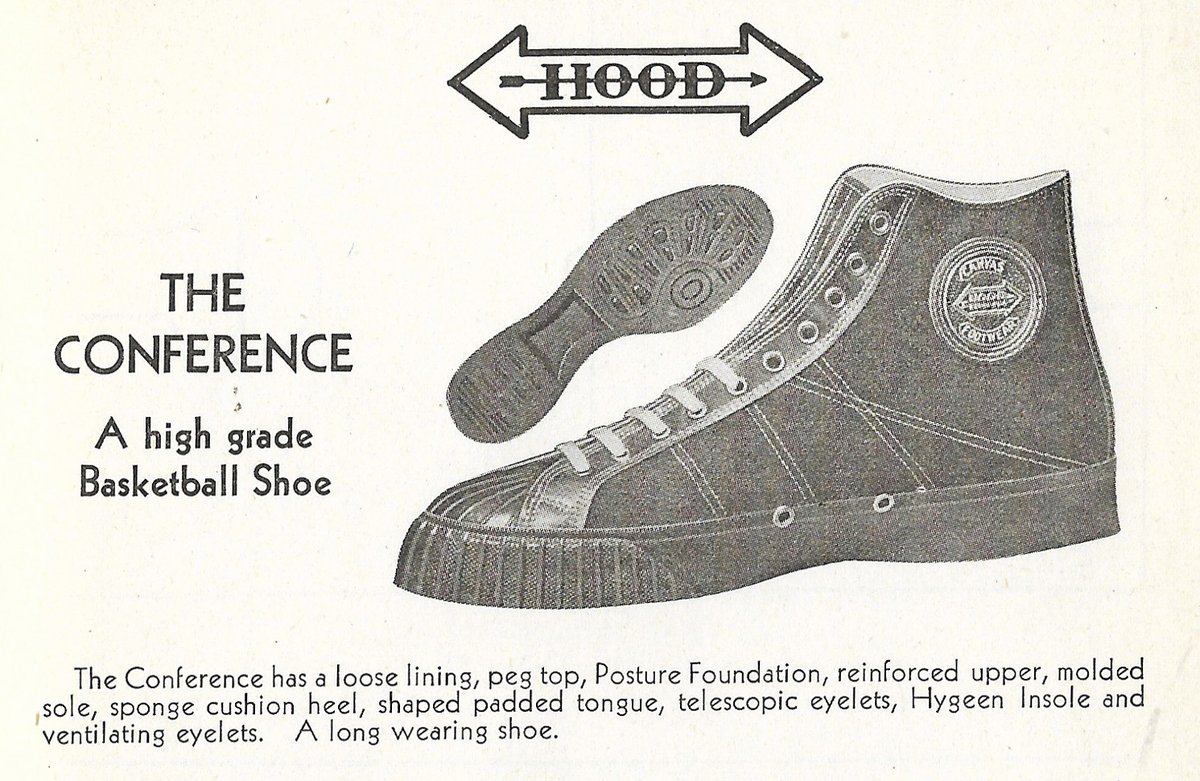
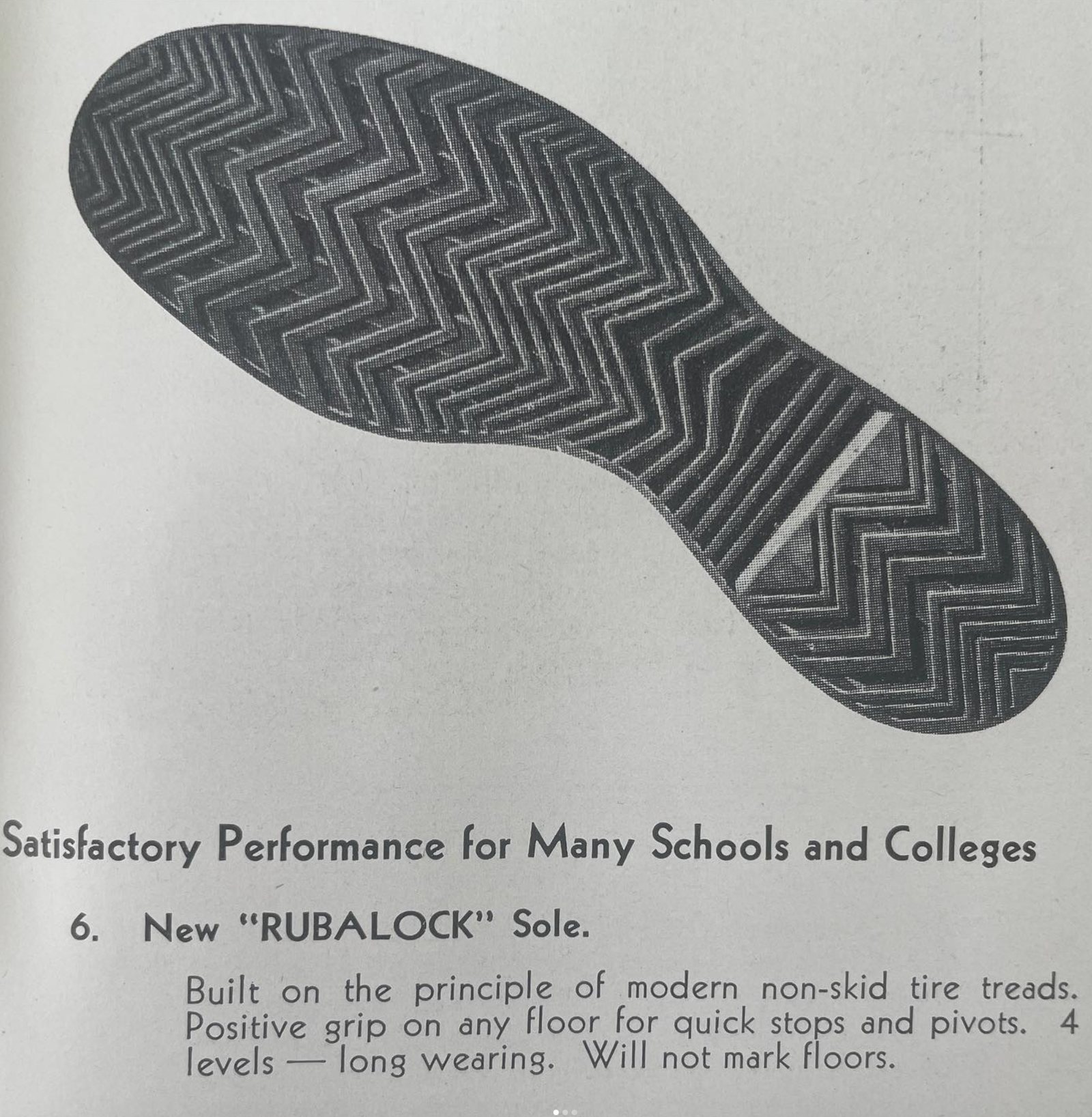
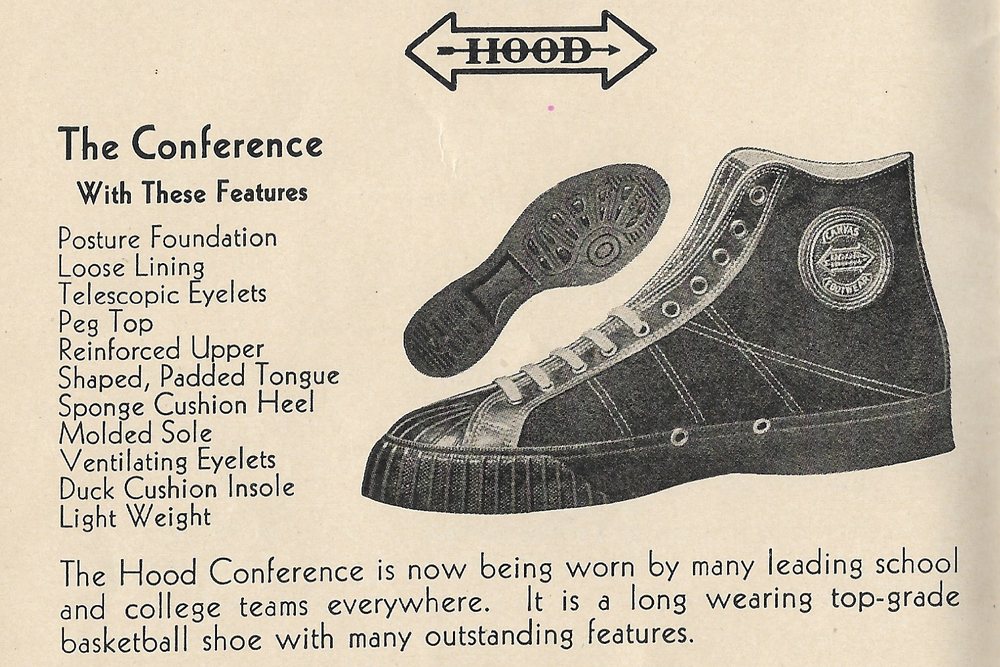
In 1933 the Conference arrived with a moulded, ridged rubber toe cap, built to take the punishment of the court. In 1937 Hood gave it a new sole, cut like the tread of a non-skid tire — Hood made tires too — and called it Rubalock: “positive grip on any floor for quick stops and pivots.” Hood kept it under its basketball shoes for three decades.
Armour at the toe. A zigzag tread underneath. It is the basic grammar of the basketball shoe, and Hood was building it into the Conference in the nineteen-thirties — more than thirty years before the adidas Superstar put a shell toe over a herringbone sole in 1969, and before the Nike Blazer took the same kind of traction onto the court in the early seventies.
The list of shoes built on that idea since is endless. Hood was making it in Watertown decades before any of them.
1937 · the Rubalock sole1936 · the Conference, ridged toe cap and molded sole
Chapter IV · 1920–1959
Hood wrote the playbook.
The modern sneaker business runs on one formula. Put the shoe on the best teams. Put a champion’s name on it. Put a star on the payroll. Sell the signature. Hood was running every part of that play in Watertown while the rest of the industry was still selling gym shoes by the case.
The Greyhound, 1920s
The teams
On the floor, coast to coast
Through the twenties Hood’s Greyhound was on college and high-school courts across the country. By 1936 the catalogue could say the Conference was “now being worn by many leading school and college teams everywhere” — Tufts, Detroit, and Wisconsin under Coach Bud Foster among them.
Jack Purcell · from Canvas + Rubber
The champion
A name on the shoe
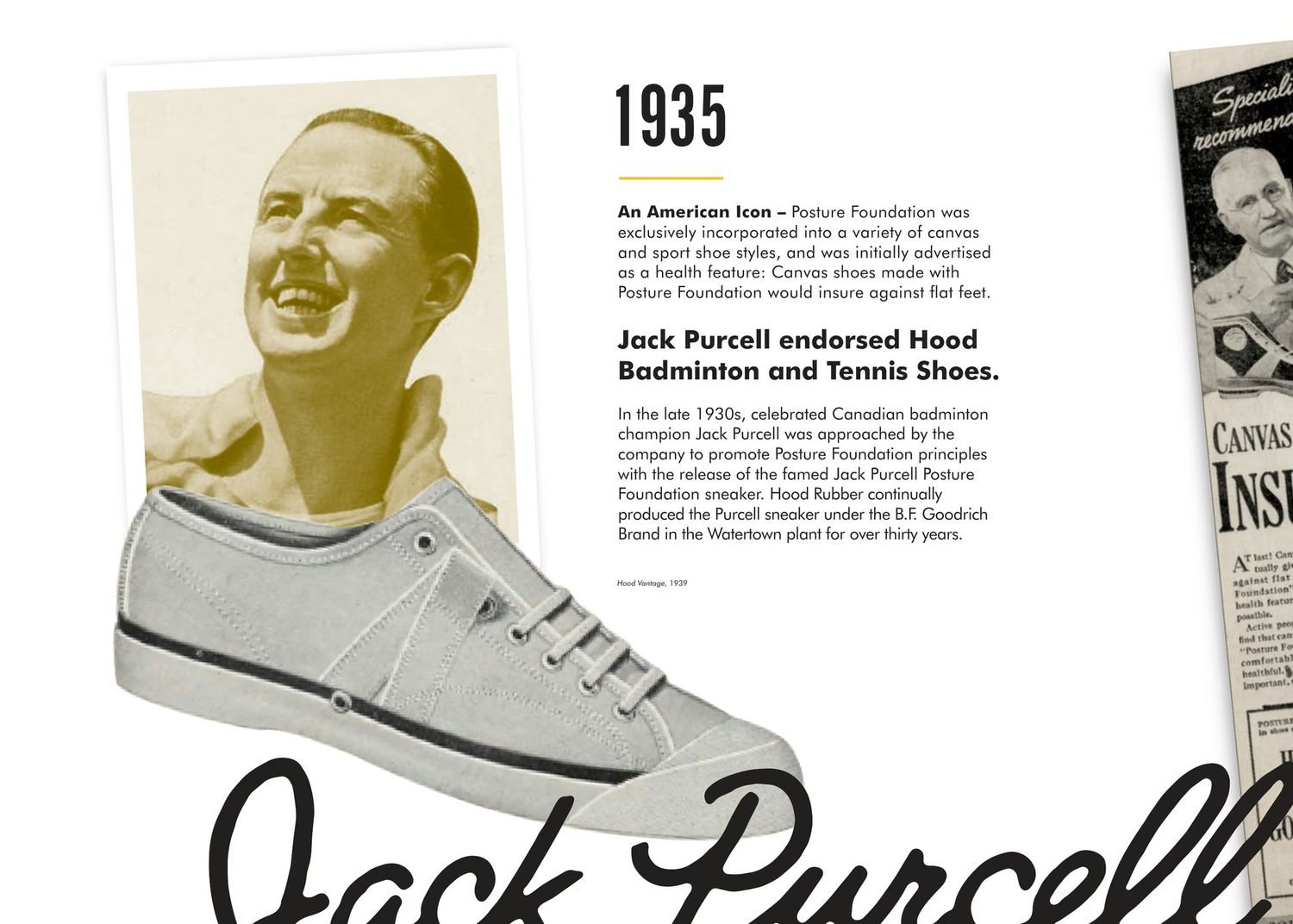
In the late 1930s Hood brought in Jack Purcell, the Canadian badminton champion, and put his name on a canvas court shoe with the Posture Foundation inside. Watertown made the Jack Purcell for more than thirty years. It is still sold today — under another company’s name.
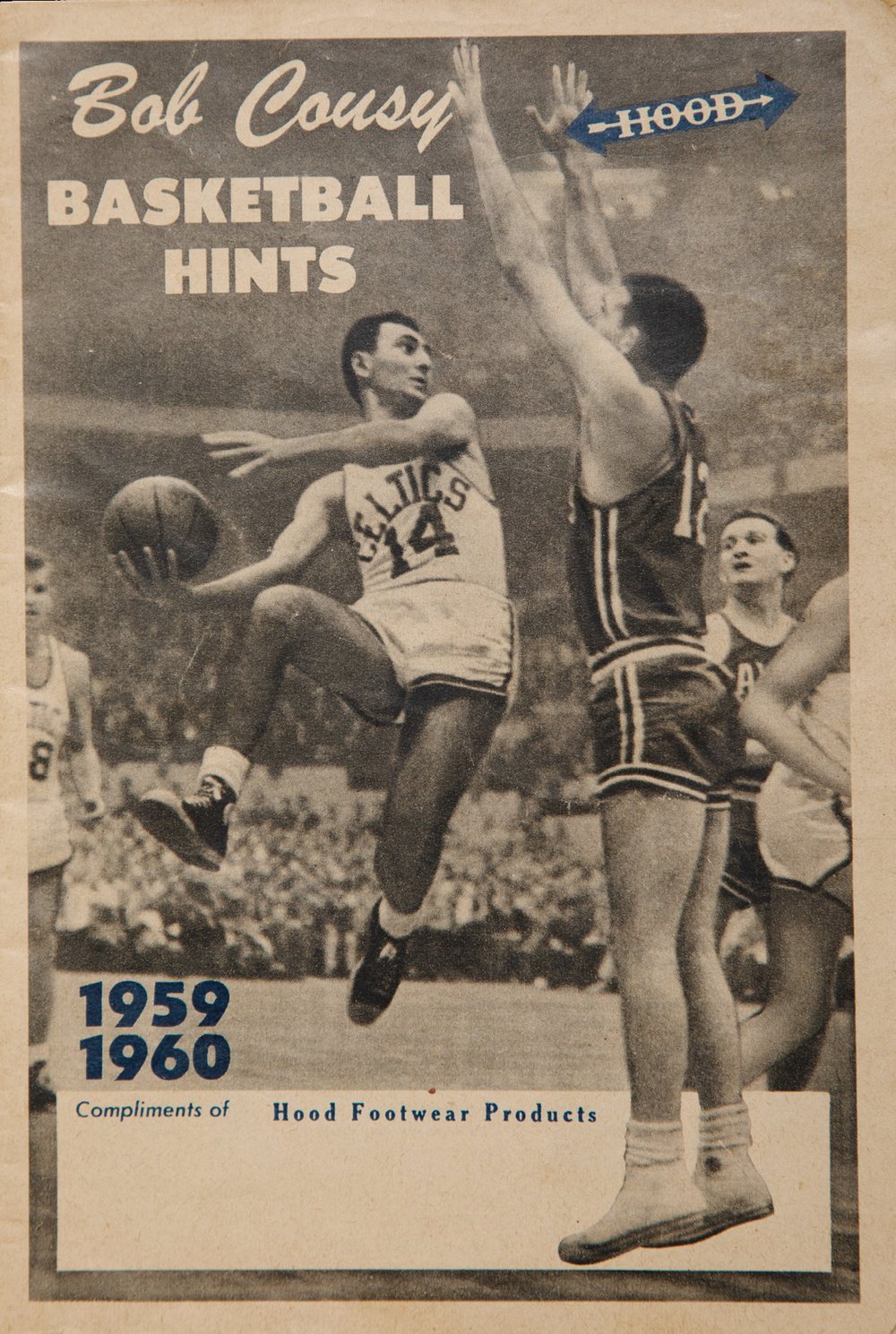
Bob Cousy Basketball Hints, compliments of Hood
The star on staff
The best player in the game
Through the fifties Bob Cousy of the Boston Celtics, the most famous basketball player in America, was Hood’s athletic staff director, testing its basketball shoes before they went to market.
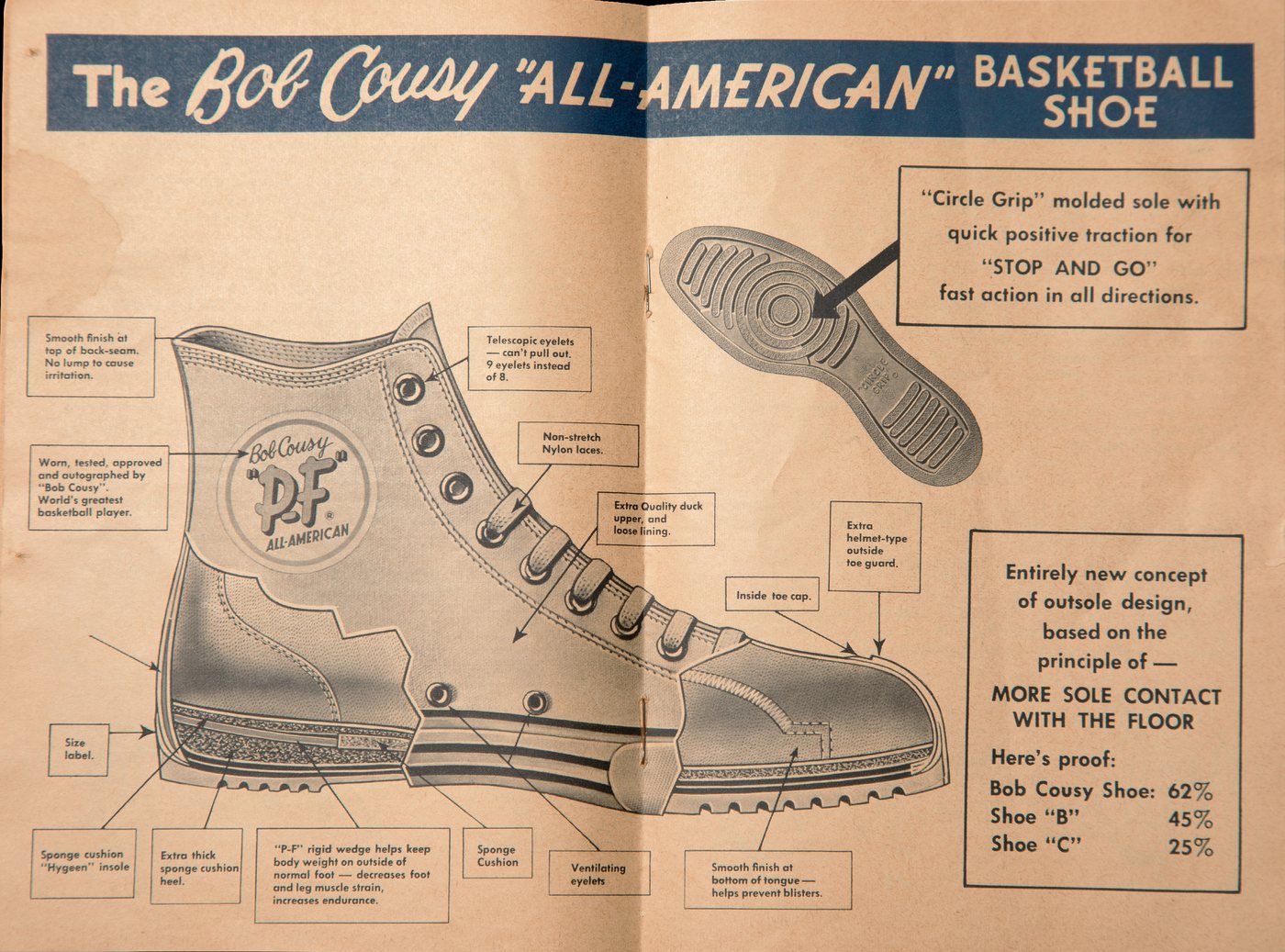
The Bob Cousy All-American, 1959
The signature
His name, his shoe
In 1959 Cousy’s name went on two Hood basketball shoes, the All-American and the Captain — a professional player’s signature basketball shoe, a full generation before the industry decided that was the whole business.
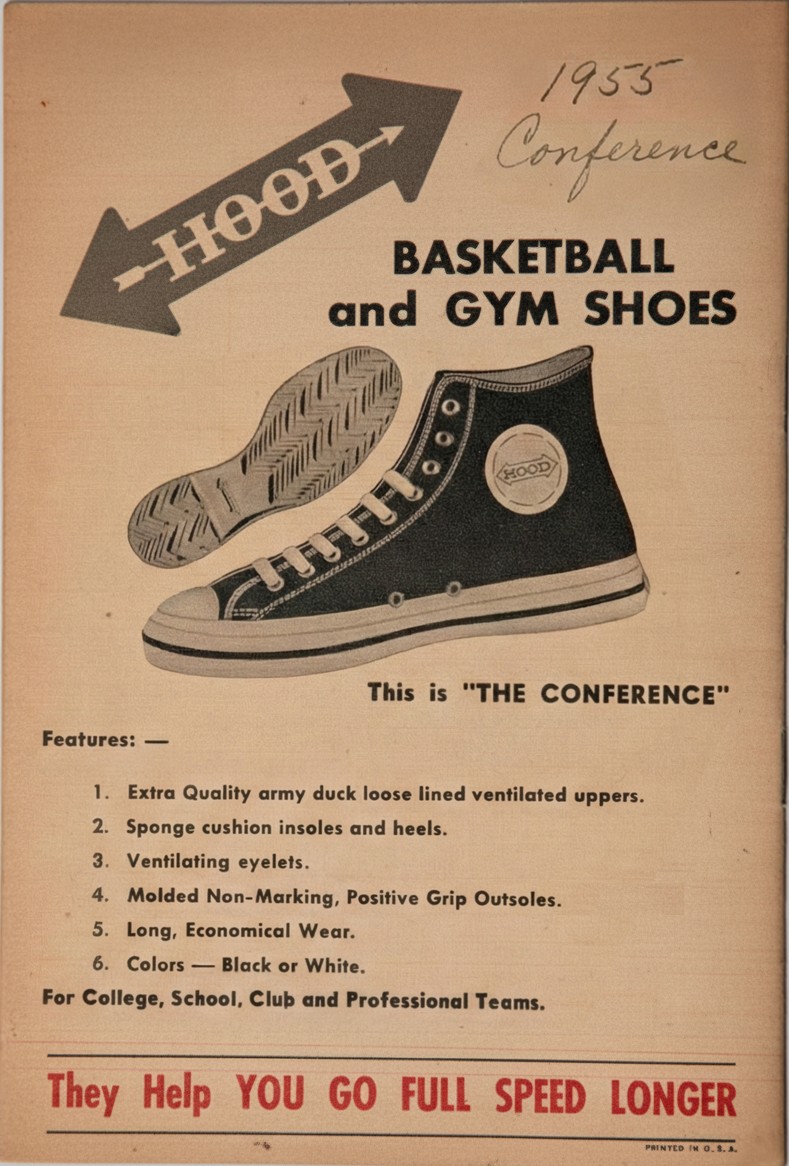
1955 · “For College, School, Club and Professional Teams”
The shoes turned up on the people who mattered. Chuck Cooper, who in 1950 broke the colour line of the NBA draft, was photographed in Hood that year; a young Bill Russell was photographed in them in 1959. And in a high-school team picture from Fairmount, Indiana, a guard named James Dean is wearing Hood Conferences.
Teams. A champion. A star on staff. A signature shoe. The formula the whole industry lives on was already written in Watertown.
Chapter V · 1929–1972
Then, nothing
In 1929 Hood merged with the B.F. Goodrich Company of Akron, and for forty years Hood shoes and Goodrich shoes came out of the same building. In 1965 Goodrich put its own name where Hood’s arrow had been. On 19 December 1969 it announced the closing of the Watertown plant, and 1,300 people lost their jobs. Three years later Goodrich sold its footwear business to the company that owned Converse. The Jack Purcell went. P-F Flyers went.
The Hood name went with neither. It went into a filing cabinet, and the business it had helped to build went on telling its own story without it.
Every great industry has an origin story. This is the chapter that was left out.
Chapter VI · 1955
The years design got it right.
Ask a curator when design peaked and you will get a surprisingly precise answer. Ask the same question about sneakers, and the answer is a name that has been missing for fifty years.
There is a quiet consensus in the design world, shared by museum curators, auction specialists and the kind of collector who can tell an original from a reissue across a room: the middle of the twentieth century was the high point. The two decades or so after the Second World War produced more objects that still set the standard than any period before or since.
The reasons are practical rather than romantic. The war had taught factories new materials and a new precision — molded plywood, cast aluminum, fiberglass, rubber vulcanized at enormous scale. Peace delivered a vast new middle class with money to spend. And for a brief window, the people who drew things still outranked the people who costed them. Objects were designed to be right, then built to last. The annual refresh, the added feature, the part engineered to fail: all of that came later.
The results are still with us, largely unchanged. The Eames Lounge Chair of 1956 has never gone out of production. The Leica M3 of 1954 is still the camera rangefinder photographers measure every successor against. Levi’s reproduces its 1955 501XX stitch for stitch. Add the 300 SL Gullwing, Dieter Rams’s radios for Braun, and Miles Davis’s Kind of Blue, cut in two sessions in 1959 and still the best-selling jazz record ever made. Each is the reference for its category — the thing everything since is compared to, and usually found wanting.
What they share is simple to say and very hard to do. They are finished.
Nothing on them is there for show. Every part has a job. And nothing done to them since has made them better, which is why their makers keep returning to the originals.
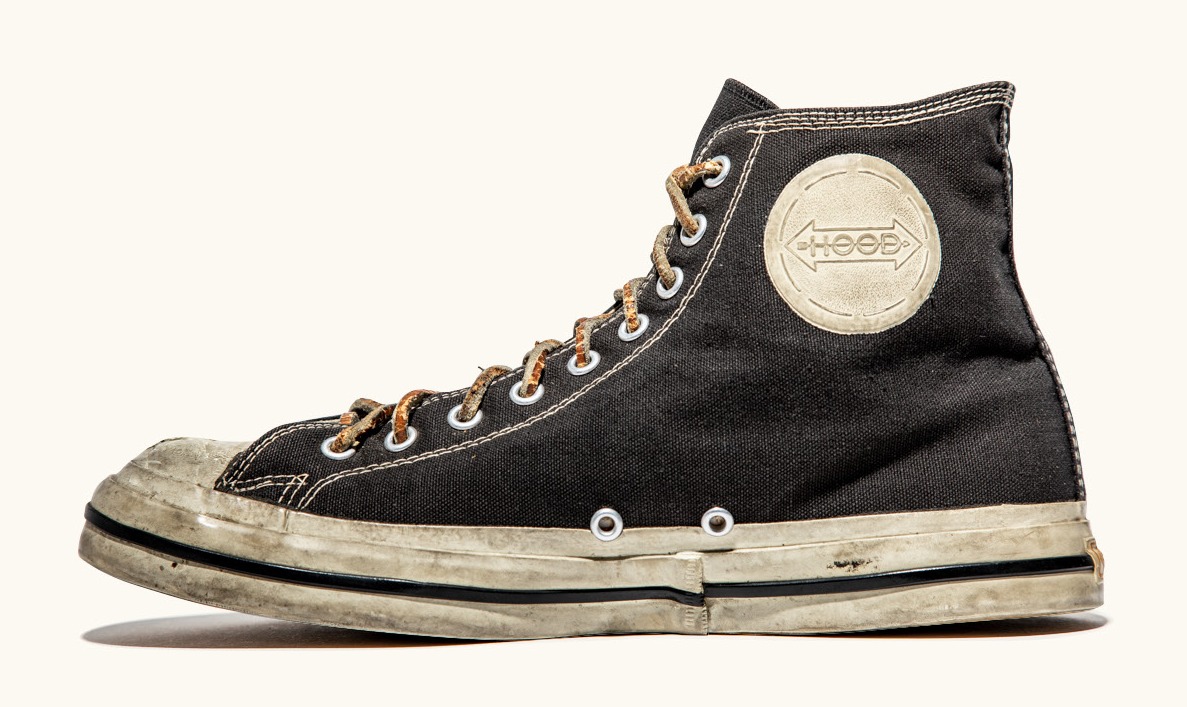
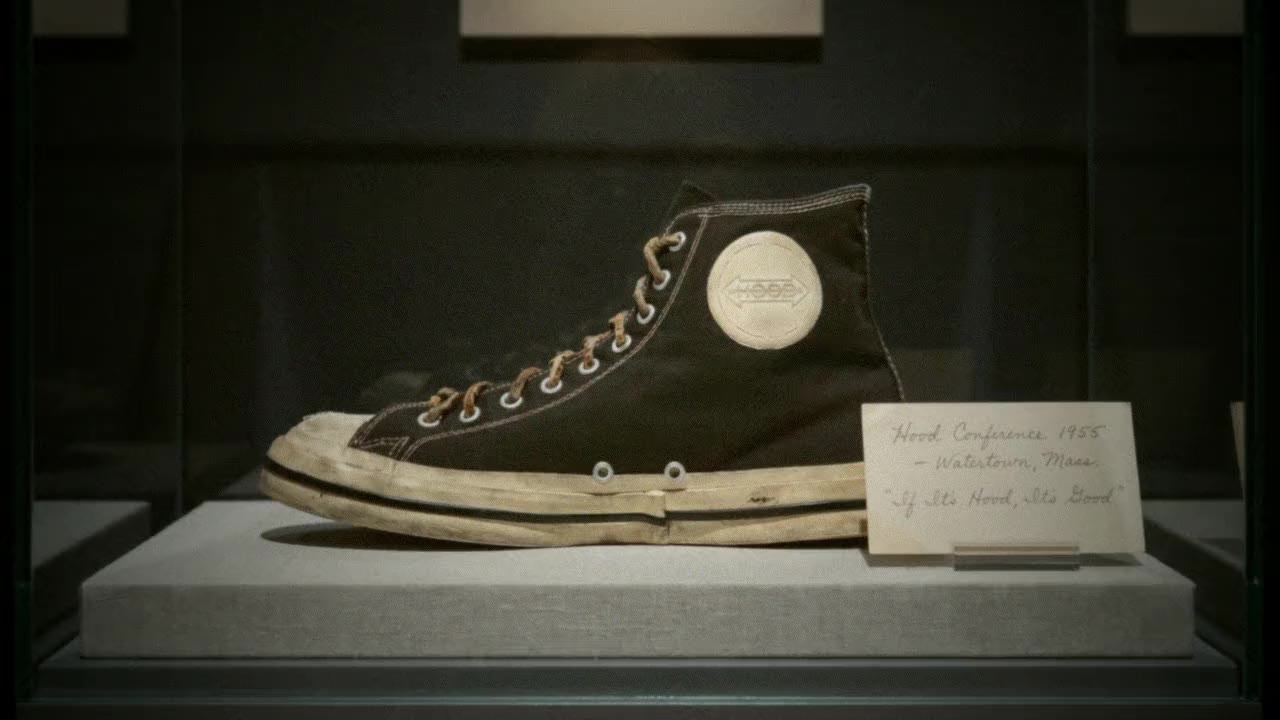
Sneakers have their own mid-century, though the business rarely tells it. In 1955 the Hood Rubber Company of Watertown, Massachusetts — once the largest rubber-footwear plant in the world — was making a basketball shoe called the Conference. Black cotton duck. A cream rubber foxing with a single black stripe. A plain moulded toe cap. A white rubber disc at the ankle, the Hood arrow driven straight through the name. Two materials, cooked together in the vulcanizer until they became one object.
It is the Eames chair in canvas. The Levi’s 501XX with laces. Read it the way a curator would, and it passes every test.
Test
Nothing added
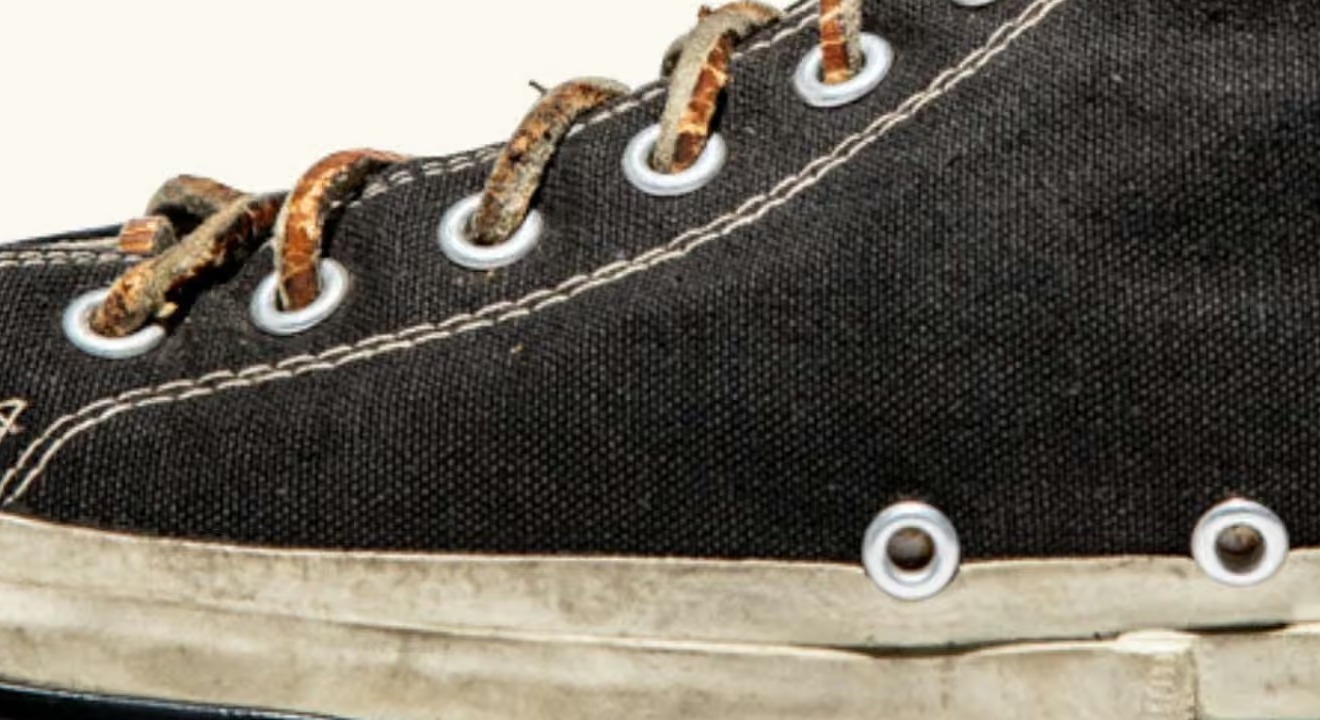
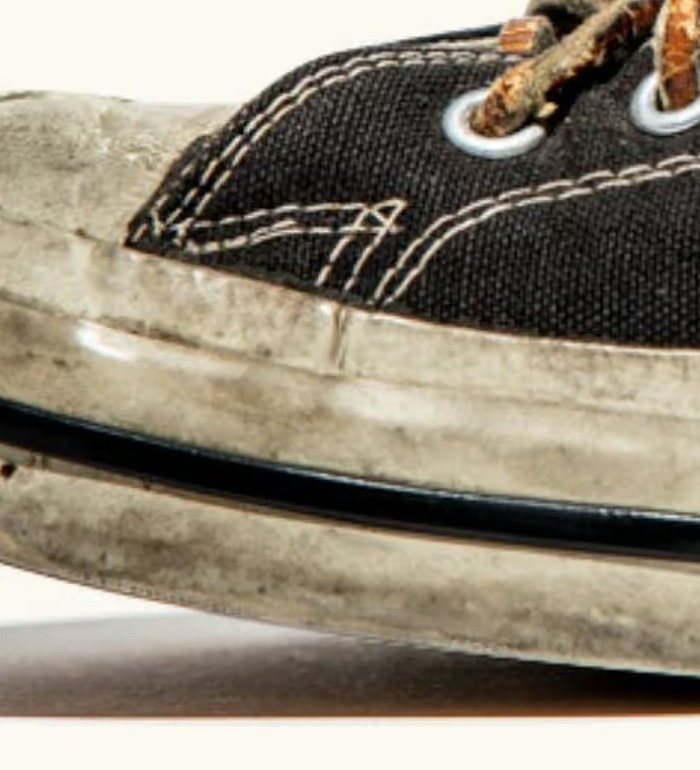
Two materials: cotton duck and rubber. Everything on the shoe is one or the other — even the badge is rubber. There is no leather trim, no plastic, no foam, nothing brought in to make it look expensive. The materials are the design.
Test
Every part has a job
The moulded toe cap takes the drag of a pivot. The foxing strip seals canvas to sole. The two eyelets at the instep let the shoe breathe. The high cut holds the ankle. Take any part away and the shoe stops working. Nothing on it is there for looks.
Test
The mark is part of the object
The Hood disc is not printed on and it is not a label. It is rubber, vulcanized into the canvas at the ankle, with the arrow driven straight through the name. It is part of how the shoe is built, and it signs the shoe at the same time.
Test
Made, not assembled
Canvas and raw rubber went into the vulcanizer as separate parts and came out as a single object. There is no glue line to find. It cannot be taken apart, because in the end it was never put together — it was cooked.
Test
Known by its year
Collectors do not say the Gullwing; they say the ’54. They do not ask for a 501; they ask for the ’55. The best designs are remembered at the moment they were right, and that year becomes part of the name. This one is the ’55.
The Hood Conference, 1955 · photographed from a surviving pair
The sneaker business has spent the seventy years since adding things: air, gel, foam, carbon plates, lights, logos. The Conference is what a basketball shoe looked like before anything was added — and, to a certain kind of eye, what one should still look like.
Seventy years of copies have not improved on it. There was nothing left in it to solve.
The flagship
The Conference, in full
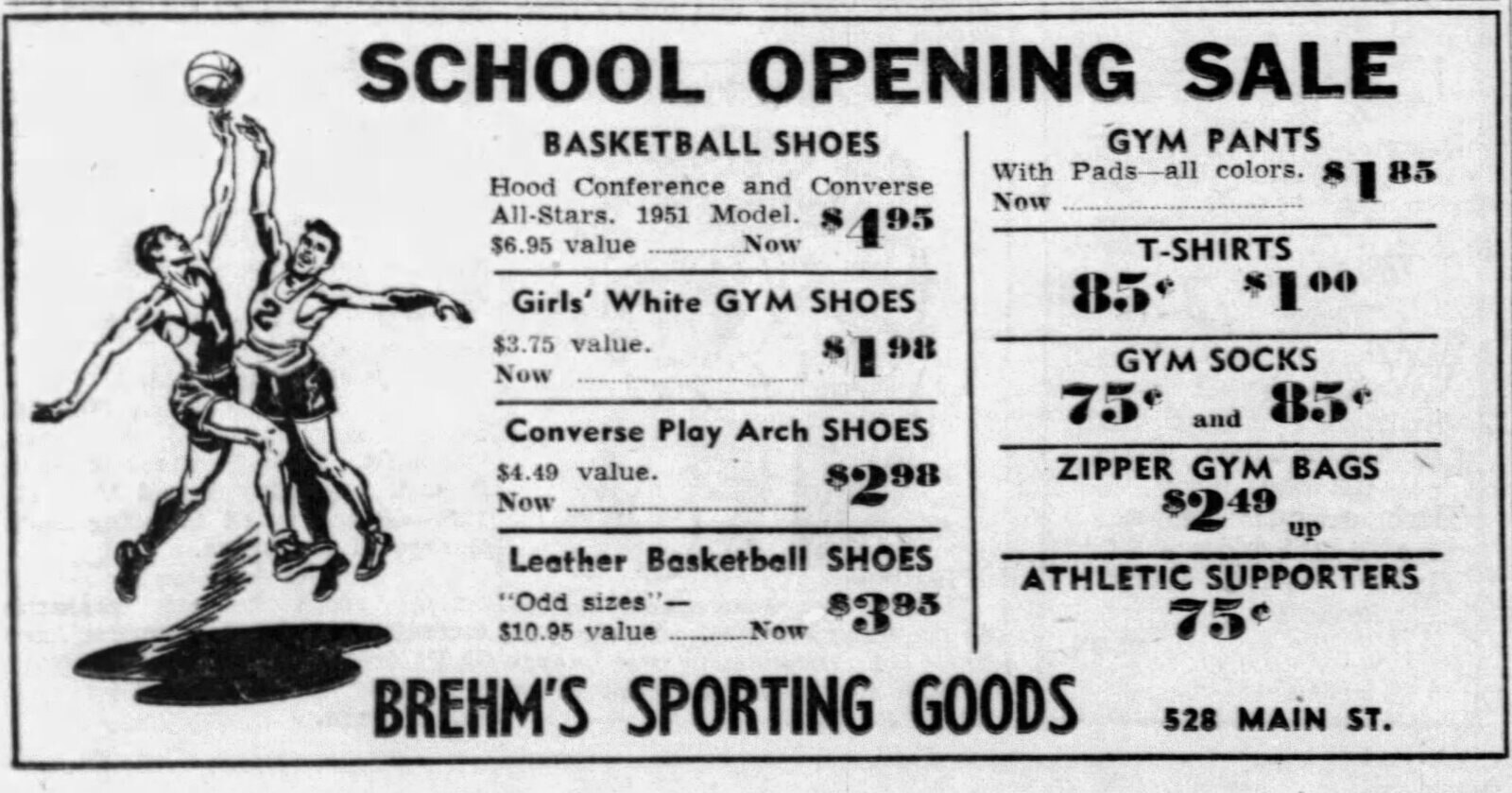
Twenty-five years of catalogue pages and newspaper advertisements — including the sporting-goods columns where the Conference and the All Star ran on the same line, at the same price, with Hood printed first.
Hood is coming back, and the Conference with it. There is no date yet. Leave an address and we will write to you once — when there is something real to see.
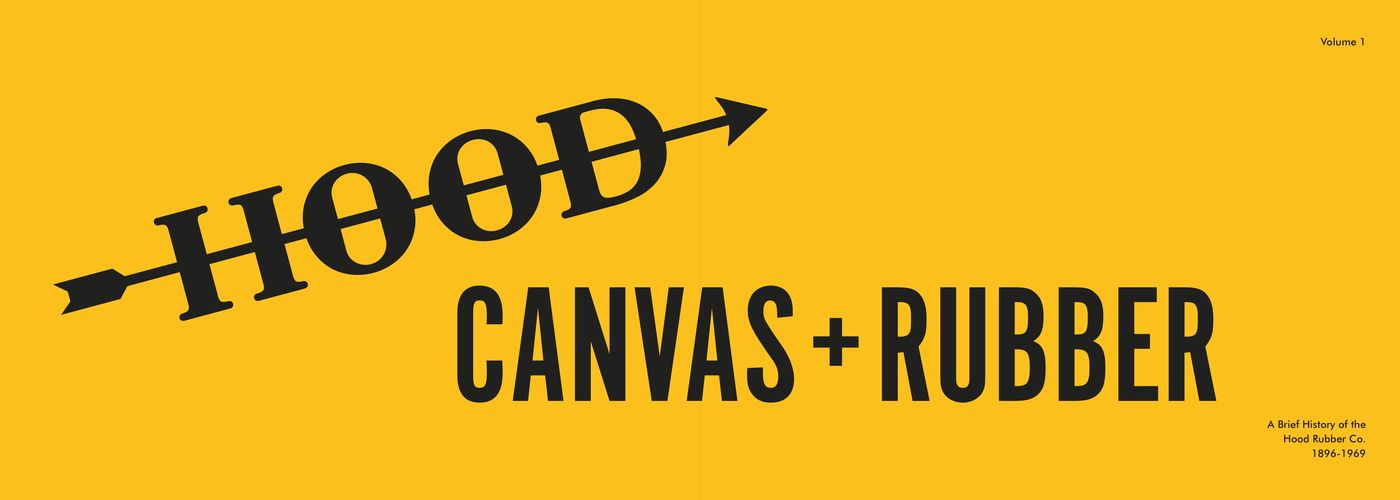
A brief history of the Hood Rubber Co., 1896–1969. Every spread, in order. Select any spread to read it larger.
Title1 / 25A retrospective of the canvas sneaker2 / 251896 · The beginning3 / 251901 · The “original” sneaker4 / 251913 · The canvas oxford5 / 25Circular vamp oxford6 / 25A legend is born7 / 25Hood basketball record8 / 251914 · The basketball shoe9 / 25General play and athletics10 / 251919 · Summer play11 / 251929 · The merger12 / 251931 · The shoes win13 / 251933 · Posture Foundation14 / 251935 · Jack Purcell15 / 251941 · A call to arms16 / 25A safeguard for active feet17 / 251945 · P-F18 / 251946 · The best of times19 / 25This is the Conference20 / 251955 · P-F Flyers21 / 251959 · Bob Cousy22 / 251969 · End of an era23 / 251969–1974 · Lost in transition24 / 25Colophon25 / 25
Audio guide · 9 stops · about 9 minutes
Take the tour.
Put on your headphones and walk the story with a narrator. Scroll at your own pace, or let the guide lead.
Stop01
Narration for this stop is being recorded — read along below.
Swipe across the spread, or turn your phone sideways